Understanding the Women’s Physical Development Pathway
Over the past few decades, Women’s sport has seen a significant rise in participation and visibility. However, the development pathways available to female players often remain fragmented, under-resourced, and shaped by sociocultural expectations. Understanding these pathways is essential for creating environments that support girls’ progression from grassroots to elite sport.
Athlete development pathways refer to the progression of opportunities, environments, and experiences that shape an athlete’s journey through sport. For female athletes, these pathways are often influenced by access to facilities, quality of coaching, gender equity in programmes, and the support provided during key developmental transitions.
Stages of the Female Athlete Journey
- Early engagement and participation is influenced by societal norms, school sport access, and family support.
- Adolescence and retention, this is a critical dropout phase due to body image, social pressures, limited opportunities, or lack of female role models.
- High-performance transition. Where access to quality coaching, funding, and competition exposure often becomes a barrier.
- Dual career and life balance. Balancing education, career, and sport; an area particularly relevant for female athletes.
- Post-career transition – moving into coaching, leadership, or sport administration roles.
Influencing Factors
When we look at female participation and development in sport through a systems theory lens (Bronfenbrenner, 1979), it becomes clear that no single factor acts on its own. Each element, social, physical, or structural, connects and interacts with others to shape an athlete’s experience. As shown in Figure 1, a range of influences come into play: gender norms and community expectations, access to facilities and competition opportunities, the impact of the menstrual cycle and body image, as well as funding challenges and limited representation in leadership roles. All these factors work together within a larger system, meaning that progress in female sport depends on understanding and addressing how these different parts influence one another.
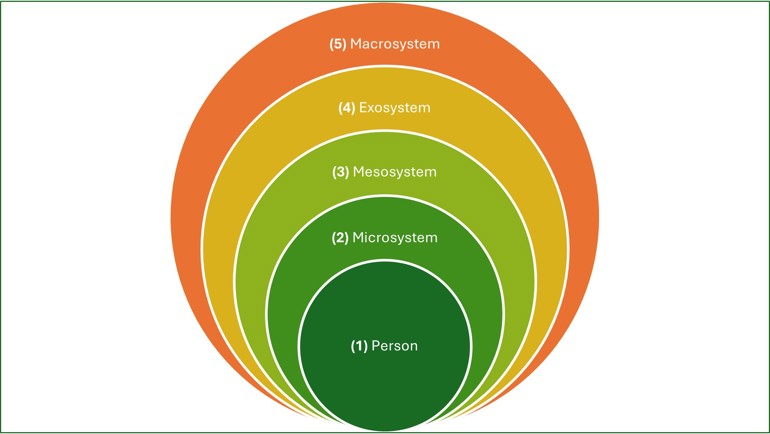
Figure 1. A systems theory view of influencing factors in female sport (adapted from Bronfenbrenner’s’ Ecological System’s Theory, 1979)
- Individual: Motivation, self-confidence, physical fitness
- Immediate environment: teammates, coaches, family, peers, access to sport structures, facilities, competition
- Communication between coaches and parents, co ordination between school sport and club
- Funding disparities, sponsorship, resource allocation, media visibility, employment demands
- Gender norms and cultural beliefs, participation rates, long-term career pathways, representation in decision-making, female-specific programmes