Introduction to Relative Energy Deficiency in Sport (RED-s)
The International Olympic Committee (IOC) first introduced the concept of Relative Energy Deficiency in Sport (REDs) in 2014 detailing the adverse health and performance outcomes experienced in both male and female athletes when exposed to low energy availability (LEA) (Mountjoy et al., 2014), otherwise known as the mismatch of an athletes dietary energy intake and total energy expenditure, resulting in insufficient energy available to meet the body’s day to day needs. When an athlete’s body does not have sufficient energy provision to meet its day-to-day functioning, this can impact an athlete’s health and wellbeing in the long term (Mountjoy et al., 2018).
High-performing athletic environments are typically driven by both internal and external pressures to achieve optimal performance, which in some instances can intentionally or unintentionally lead to altered energy intake through diet (EI) and exercise energy expenditure (EEE), and if not managed appropriately, can leave an athlete in a state of LEA. It is worth noting the formula for energy availability that identifies the amount of energy that the body can contribute to functions associated with health, well-being and performance is well established in sports science as (Loucks AB, 2013) :
EA (energy availability) = Energy intake (kcal) – exercise energy expenditure (kcal) / fat free mass (kg/day)
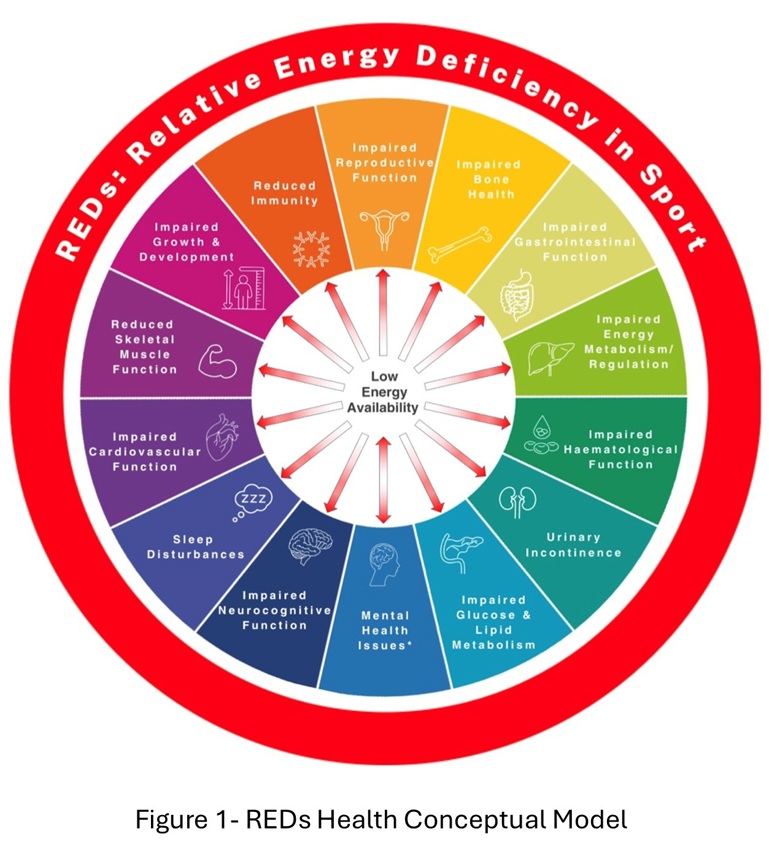
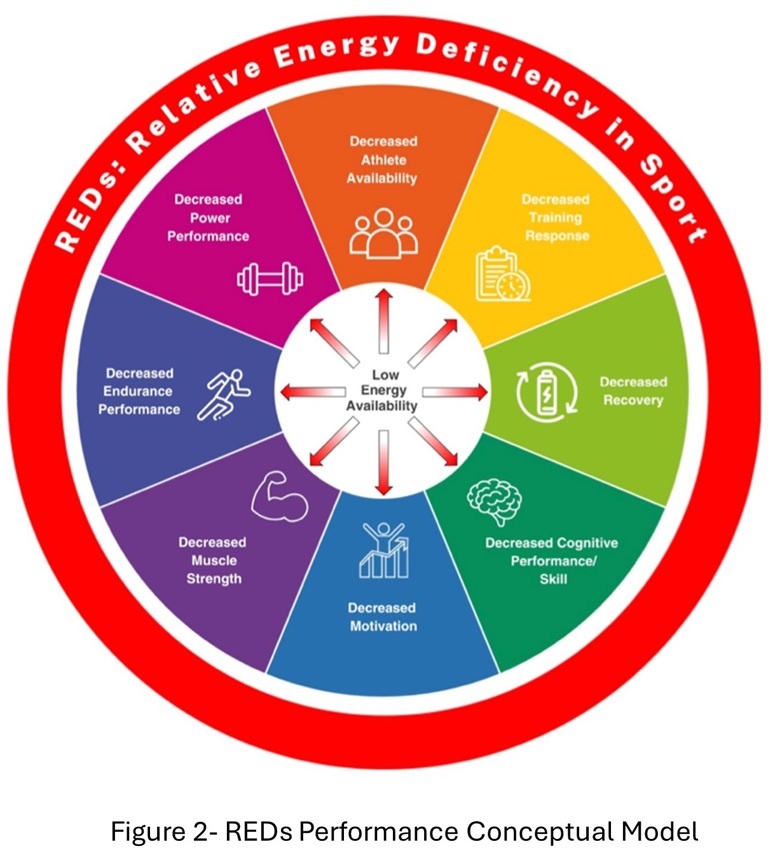
If LEA is left unmanaged, this can lead to adverse health and performance outcomes including (however are not exclusive to); decreases in energy metabolism, impact on reproductive function, negative impact on both musculoskeletal and bone health and the overall functioning of the immune system (see figure 1). Subsequently, LEA can lead to impaired athlete wellbeing, increased injury risk and ultimately decline in an athlete’s health and sporting performance (see figure 2).
As a result, the development of the REDs conceptual models took place to raise awareness for both the athlete and athlete support staff (including coaches, sport science and sports medicine communities) of this syndrome. Further, the REDs Health Model (Figure 1) and the REDs Performance Model (Figure 2) were created to highlight the range of body systems impacted by REDs and subsequently the potential adverse performance impact (Mountjoy et al., 2023). With this in mind, outcomes noted in figures 1 and 2 can occur at different timeframes and severities, individual to the athlete in question (Burke et al., 2023).